
Freezer trays and small lidded containers can make homemade baby-food portions easier to store. Choose a format that fits the portions you actually use, is simple to label, and has clear manufacturer instructions for freezing, cleaning, and any reheating. You do not need a special baby-food appliance or storage set to make homemade food.
Two formats to compare
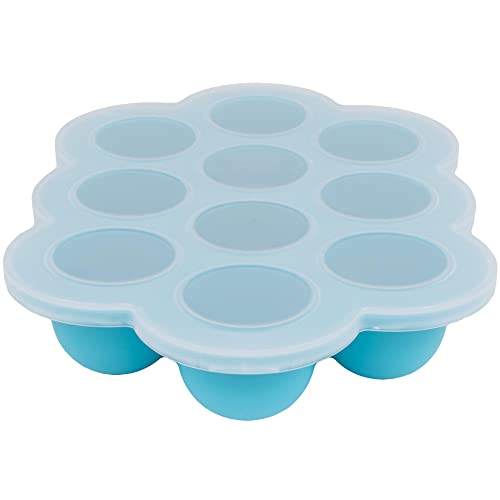
WeeSprout Silicone Baby Food Freezer Tray, 10 × 1.5 oz
Ten marked portions, clip-on lid, reinforced base, and top-rack dishwasher-safe per manufacturer; intended for freezing and portion transfer.

OXO Tot Baby Blocks, 2 oz
Six measured containers; manufacturer lists freezer, microwave, and dishwasher use. Follow heating directions.
As an Amazon Associate I earn from qualifying purchases. Confirm listing variant and included pieces. Sources: WeeSprout · OXO Tot
WeeSprout Silicone Tray (10 × 1.5 oz)
- Ten portions in one tray
- Marked 0.5 and 1 oz levels
- Clip-on lid and stackable design
OXO Tot Baby Blocks (2 oz)
- Six separate lidded cups
- Measurement marks
- Microwave use with lid removed per maker
*Prices are approximate and may change. Always check the live price on Amazon before buying.
Tray or individual containers?
| Format | Can work well when… | Check before buying |
|---|---|---|
| Flexible portion tray | You want to freeze several small portions together, then transfer frozen portions to another container. | Whether a lid is included, how easily portions release, and the maker’s cleaning/freezer instructions. |
| Lidded single-portion cups | You prefer to keep portions separated and labeled in their own container. | Portion size, lid fit, stackability, and whether the maker permits freezer and microwave use. |
| Reusable freezer-safe food containers | You already have containers sized for your usual servings. | Food-contact use, temperature limits, and instructions for thawing or reheating. |
The American Academy of Pediatrics notes that an ice-cube tray can be used to freeze homemade baby-food leftovers; it describes each cube as about one ounce, suggests labeling the food type and date, and says to plan to use frozen baby food within three months. Follow the current guidance and your container’s own instructions. AAP HealthyChildren: making baby food at home
How to choose a container set
WeeSprout's 10-section tray suits batch freezing and portion transfer; OXO's six 2-ounce cups suit separate portions. OXO says the cups are microwave-safe with lids removed; check current instructions and leave room for expansion when freezing liquids. These are manufacturer details, not hands-on test results. OXO instructions
Match the portion size to your routine
Small portions can be convenient when a child eats only a little of a new food. Larger portions may fit foods your family serves more often. Compare the labeled capacity with the portion you usually thaw; tray cavities and cup sizes are not standardized.
Check materials and temperature directions
Look for explicit manufacturer guidance for freezer use. If you plan to warm food in the same container, verify that the exact container is rated for that heating method and follow its instructions. Freezer-safe does not automatically mean microwave-safe, oven-safe, or dishwasher-safe.
Think through freezing and transfer
Some trays are designed to release frozen portions into a separate storage bag or container. Individual cups keep portions separate but take more room. Check how lids fit, whether the tray stacks, and how the design handles spills before contents are frozen.
Make labels easy to read
Label each batch with the food type and date. If you transfer portions after freezing, move or repeat the label so the information stays with the food. Use a storage container that closes securely and follow the food-storage guidance from your pediatrician or recognized health authority.
Safe handling basics
Use clean containers and utensils and follow current food-safety guidance. Do not use a container for a purpose the manufacturer does not allow. The AAP advises against feeding infants under age one honey and points readers to additional choking-prevention guidance; ask your child’s clinician about readiness for solids and age-appropriate textures. This article is about storage containers, not individualized feeding or medical advice.
If you make batches with a dedicated appliance, compare its cleaning and storage steps in our baby food maker guide. The appliance and freezer container are separate decisions: confirm that each item is suitable for its intended use.
Frequently asked questions
How long should homemade baby food stay in the freezer?
The AAP HealthyChildren article says to plan to use frozen homemade baby food within three months. Check the current source and your storage setup; this is not a claim that every freezer or food retains the same quality for that entire period.
Are silicone trays better than plastic containers?
Material alone does not establish that one container is best. Compare the exact product’s food-contact information, portion size, lid, cleaning directions, and allowed temperature range.
Can I microwave a freezer tray to thaw food?
Only if the manufacturer explicitly permits that use for the exact tray and gives instructions. Some trays are for freezing and portion transfer only; thaw or warm food in an appropriate container instead.
Do I need special baby-food containers?
No. The AAP describes using a regular ice-cube tray to freeze portions and then transferring them to another storage container. Choose clean containers that are appropriate for the intended use and clearly label them.